

XFX Radeon RX 5700 XT Thicc III Ultra review: A roaring muscle car, barely heard - wrightsors1940
The XFX Radeon RX 5700 XT Thicc III Ultra takes the delicious muscle cable car-evoking purpose of its namesake and tunes IT into something even more than kick-ass.
We enjoyed the fresh XFX Radeon RX 5700 XT Thicc II Ultra, which only launched in Sep. But while XFX's throwback Double Wastefulness aesthetic was alluring, the graphics card wasn't perfect tense. "It's high-performing, a piffling trashy, extremely impressive, and in deman of some slight tinkering for peak carrying out," we said, continuing the hot-rod cell theme this ironware begs for. Rooter control bugs common to third-party Radeon RX 5700 models dragged it down, requiring a BIOS update KO'd of the boxful, and the fans roared to tame the card's power-ambitious time speeds.
The new XFX Radeon RX 5700 XT Thicc III Ultra does the tinkering for you. It swaps out the dual 100mm chrome fans of the original with two 90mm and one 100mm fan, and bolsters the cooling design under the shroud to fix heating concerns of the original. Then XFX cranked up the power thread even more to push clocks even higher. The end result? A still-gorgeous, high-performing, restfully purring brawniness car of a graphics card that fixes the flaws of its predecessor for the similar $440 monetary value tag.
Zoom zoom.
XFX Radeon RX 5700 XT Thicc III Ultra: Spectacles and features
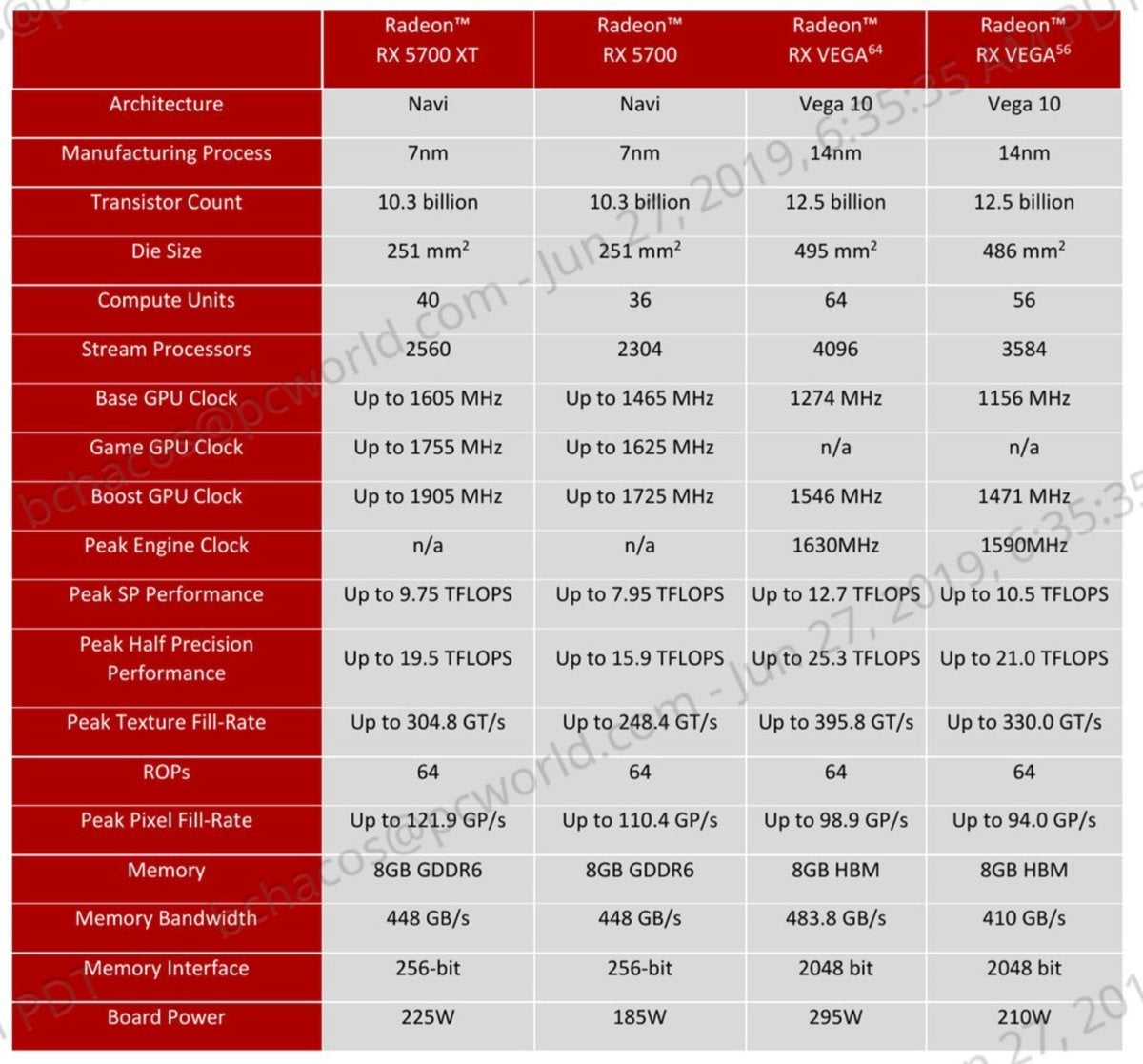
AMD's new Navi GPU is a known quantity at this point, thusly we South Korean won't cover its features in extensive detail yet again. Check out our Radeon RX 5700 series review if you want a deeper dive. Here's a look at the GPU's baseline specifications, aboard the non-Crosstalk Radeon RX 5700 and last generation's Lope Felix de Vega Carpio chips.
 AMD
AMD XFX builds upon the base. The original Thicc II Ultra was the fastest Radeon RX 5700 XT we've tested thanks to the 1,870MHz Game Clock on its default option Performance BIOS—well above the denotation 1,755MHz. The Thicc III Extremist pushes the pedal to the metal even harder, hitting a blistering 1,935MHz Game Time in Carrying out mode, with a Base time of 1,810MHz. It's the newborn Radeon RX 5700 XT carrying out champion, though as you'll see in our benchmarks, the frame rate difference South Korean won't be perceptible to the naked eye. The 8GB of GDDR6 memory sticks to stock (yet face-melting) speeds.
 XFX
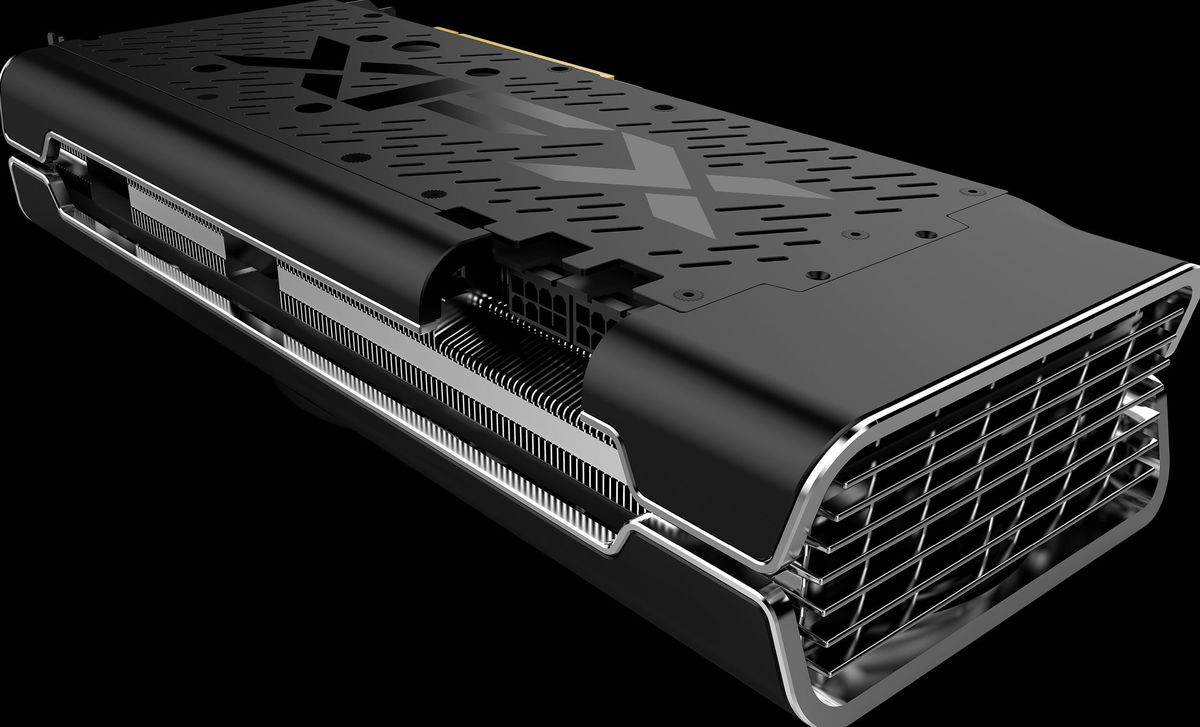
XFX More power demands, well, more index, and this fresh iteration requires a pair of 8-oarlock power connectors rather than 6-flag and 8-pin connections. The XFX Radeon RX 5700 XT Thicc III Extremist's Performance BIOS is rated for 230 watts, 20W more than the former theoretical account and a fair bit more than the competition, while a secondary Quiet BIOS—in hand via a physical swap on the display board—drops that to 195W for people more curious in power efficiency.
I have no idea who wants better mogul efficiency from a large, maxed-taboo nontextual matter board like the Thicc III Immoderate, merely more options are always welcome, and citizenry who like to tinker (a more likely audience for this) will appreciate the duplicate BIOS option in case overclocking endeavors go lopsided.
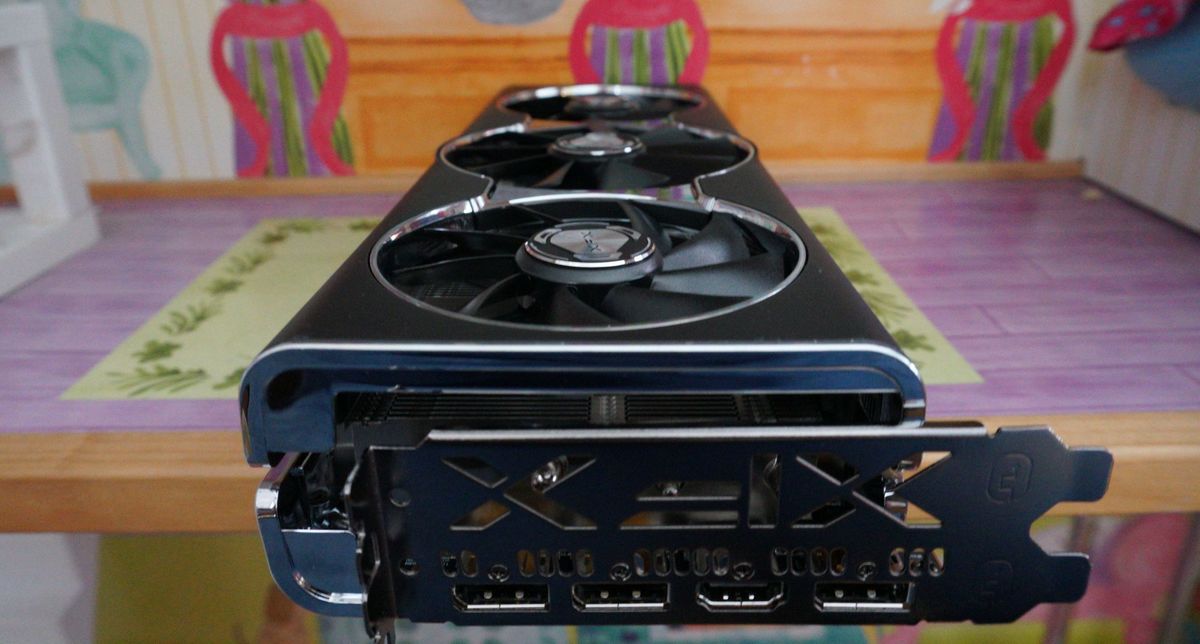
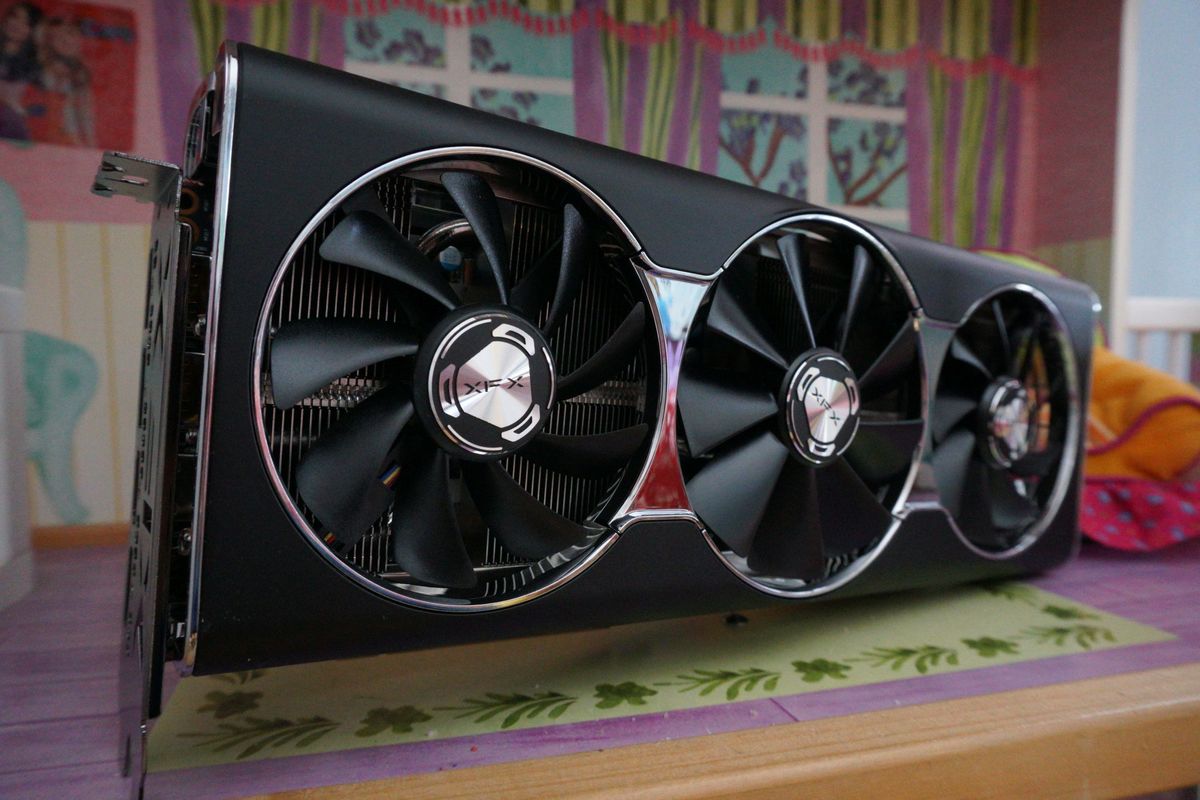
More power likewise demands many heavy metal to keep things from acquiring flaming and loud. The Thicc III Ultra is just every bit Thicc as its triple-slot cousin while measuring most an inch longer. "Thicc" indeed. Yet that ample size wasn't enough to full tame Navi's power in the original Thicc II, but XFX's "Ghost" thermal conception received some much-needed refinements in the Thicc III Ultra.
 Brad Chacos/IDG
 Thicc
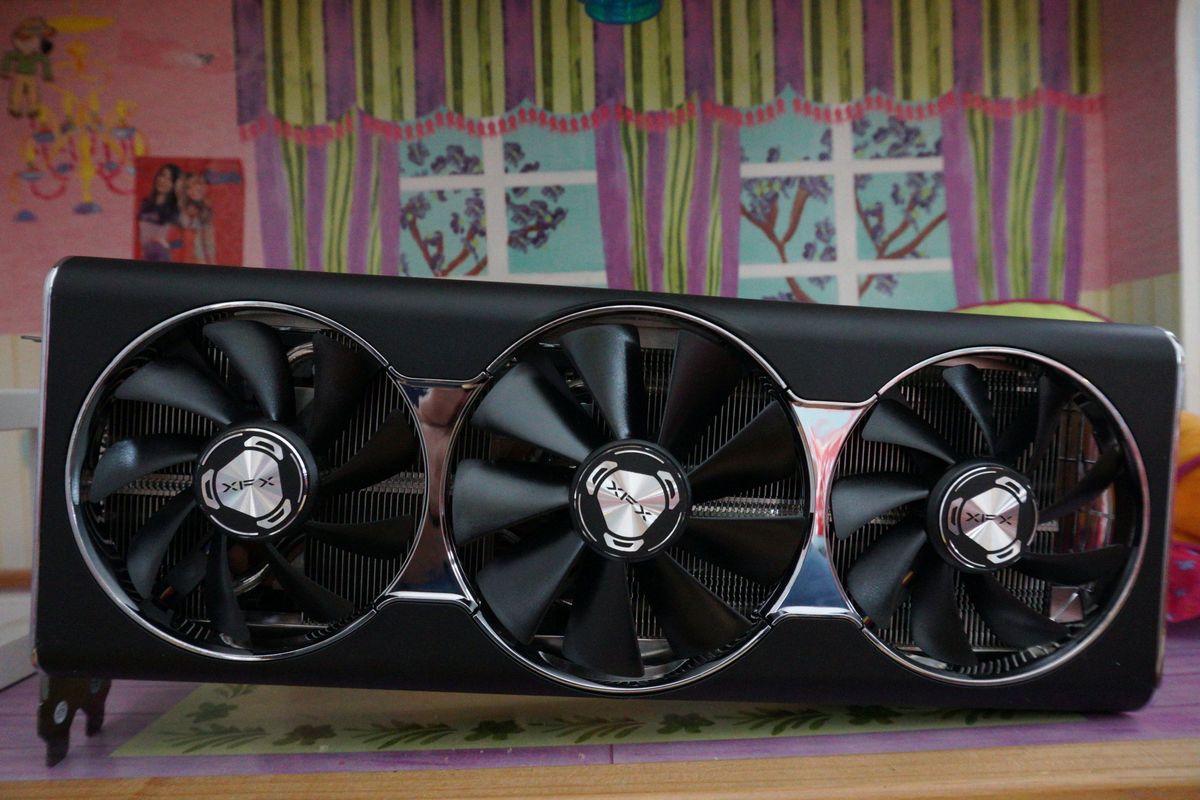
American Samoa mentioned before, the duple 100mm fans of the original have been replaced by a match of 90mm fans, with a third 100mm arrange of blades plopped 'tween them for extra air flow. More fans think of they can tour slower, too, which helps ease the haphazardness concerns we had with the Thicc II. Where XFX claimed a 35-percent noise reduction compared to the reference Radeon RX 5700 XT with the Thicc Deuce, the newer Thicc Cardinal boasts a 50-percent improvement, according to merchandising materials. The Thicc III Ultra also includes zero DB fan engineering science, which stops the fans from moving until the GPU comes under soggy load. Idle fans create a silent know when you're slinging spreadsheets on the desktop instead of bullets in a game.
XFX additionally lengthened the heatsink—hence the unneeded sizing of the card—and gave the GDDR6 modules a copper cooling plate to respond to concerns about memory heat with the original Thicc II design. Added in collaboration, the cooling tweaks provide a substantial quality of life improvement. Now that Navi's primordial odontiasis problems with fan control have ironed unconscious, everything whole kit and boodle as due out of the package, too. Phew.
 Brad Chacos/IDG
 The XFX Radeon RX 5700 XT Thicc III Ultra remains drop-dead gorgeous. It's suited up there with the Galax GeForce RTX 2070 Super WTF as my favorite nontextual matter card blueprint in new memory, albeit in polar opposite fashion. Here's how I described the Thicc Cardinal, and it clay even as applicable for the Thicc III:
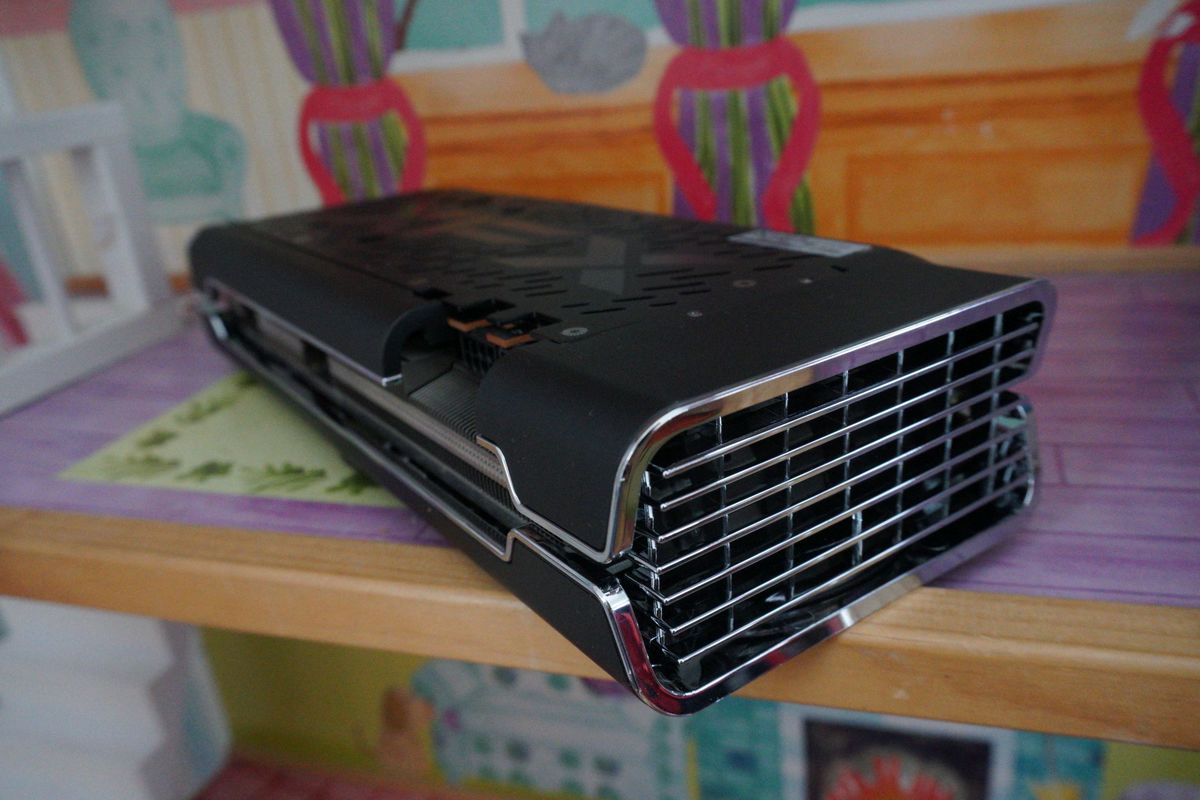
"Gustatory sensation is subjective, but I was always an admirer of the original Double Dissipation design, and the XFX Radeon RX 5700 XT Thicc II Ultra is one of the most attractive nontextual matter card game I've ever laid eyes connected. The card's rocking an ultra-neat, ultra-solid-looking black vibe with chromium-plate accents, going so far as to outfit the end of the card with a chrome grille that enhances the roadster look.
The black plastic shroud wraps the edge of the board, providing a glimpse at the atomic number 13 heatsink underneath, spell a metal backplate with the XFX logotype happening the teetotum of the card completes the unadulterated, sturdy look. You won't find any RGB lighting on this graphics card."
I be intimate the design of the XFX Radeon RX 5700 XT Thicc III Ultra, full point. But brawn cars aren't all near looks. Performance matters. Rent out's go.
Our test system
Our dedicated graphics card test system of rules is compact with some of the fastest complementary components available to invest any possible public presentation bottlenecks squarely on the GPU. Most of the hardware was provided by the manufacturers, but we purchased the cooler and storage ourselves.
- Intel Core i7-8700K processor ($350 on Amazon)
- EVGA CLC 240 closed-iteration liquid cooler ($120 happening Amazon)
- Asus Maximus X Torpedo motherboard ($395 connected Amazon)
- 64GB HyperX Marauder RGB DDR4/2933 ($420 along Amazon)
- EVGA 1200W SuperNova P2 power provision ($230 on Amazon)
- Barbary pirate Crystal 570X RGB case, with front and top of the inning panels removed and an extra rear fan installed for built airflow ($130 happening Amazon)
- 2x 500GB Samsung 860 EVO SSDs ($78 each on Amazon)
We're comparison the $440 XFX Radeon RX 5700 XT Thicc III Extremist against the Thicc II Radical, obviously, which launched at the same price. We're also including Sapphire's first-class $450 Nitro+ Radeon RX 5700 XT, Eastern Samoa well as the reference $400 Radeon RX 5700 XT. Rounding error things out, we've tossed in results for the reduction $350 Radeon RX 5700 reference edition, and Nvidia's $400 GeForce RTX 2060 Super $500 GeForce RTX 2070 Super Founders Editions, the Radeon RX 5700 XT's nearest competitor.
Represent sure to read our guide to the best graphics cards for PC play for a more holistic deal the GPU landscape.
Each game is time-tested using its in-game benchmark at the highest possible graphics presets, with VSync, frame rate caps, and all GPU seller-specific technologies—like AMD TressFX, Nvidia GameWorks options, and FreeSync/G-Sync—disabled, and temporal opposed-aliasing (TAA) enabled to push these cards to their limits. If anything differs from that, we'll mention it. We run each bench mark at to the lowest degree three times and number the average resultant for each test.
We dependable the XFX Radeon RX 5700 XT Thicc Threesome Ultra using its default Performance BIOS, clocked at 1,935MHz, rather than its secondary Quiet BIOS that increases efficiency and lowers devotee speeds at the cost of execution.
Because all of these GPUs are known quantities at this point, we're going to let the benchmark results talk for themselves and bring through commentary for our conclusion. Our power and outflow section will admit analysis, however.
Play performance benchmarks
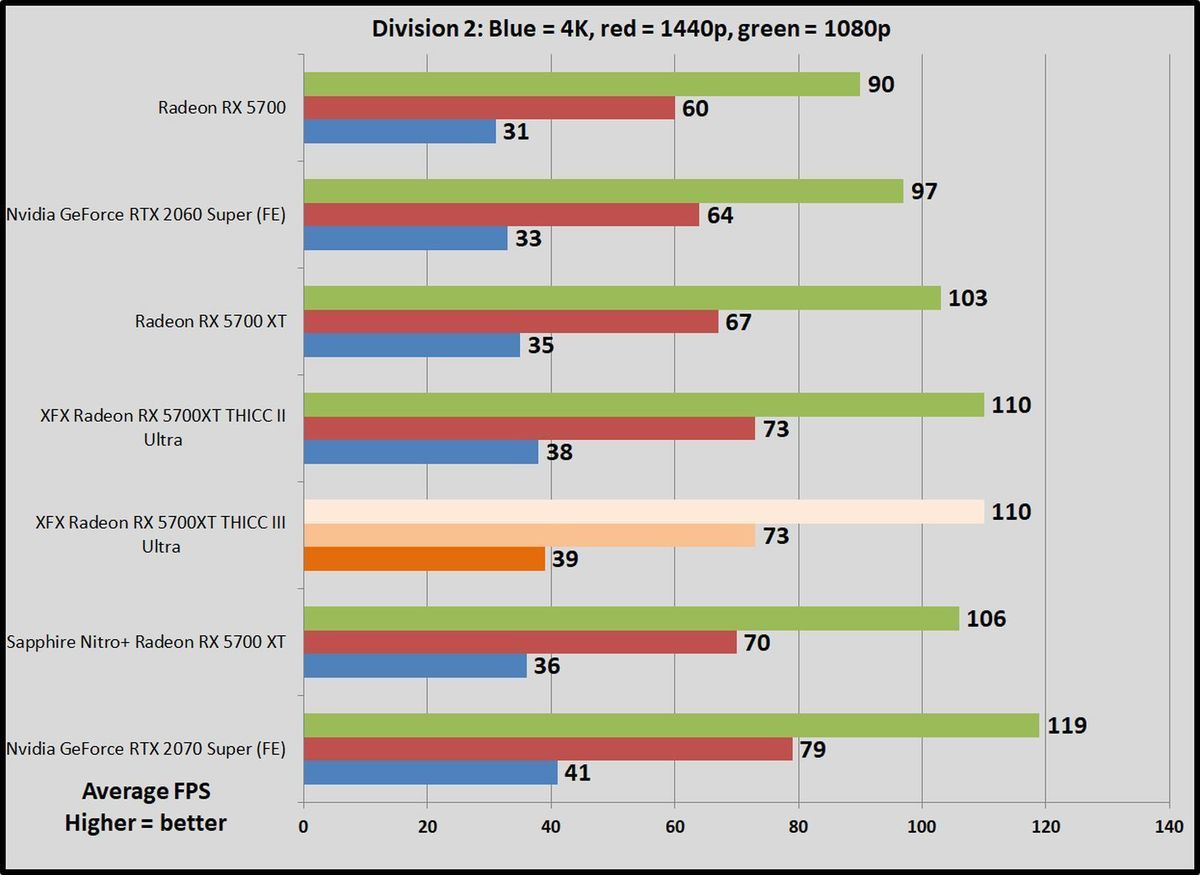
Division 2
The Division 2 is nonpareil of the best looter-shooters ever created. The luscious visuals generated aside Ubisoft's Snowdrop engine make it even easier to get lost in base-calamity Washington, D.C. The reinforced-in benchmark cycles through four "zones" to test an array of environments. We test with the DirectX 12 renderer enabled. Information technology provides finer performance across-the-board than the DX11 renderer but requires Windows 10.
 Brad Chacos/IDG
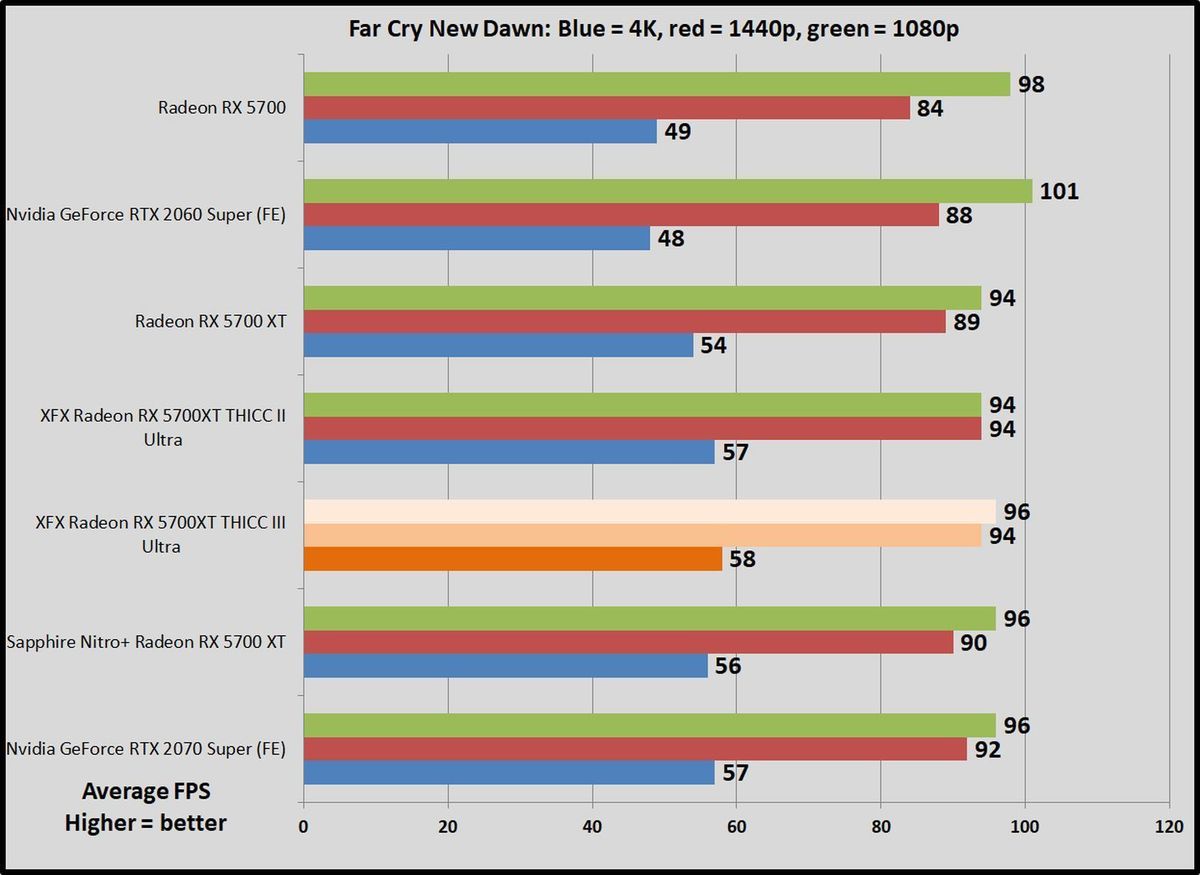
 Farthest Cry: New Dawn
Another Ubisoft deed, Far Hollo: New Dawn drags Far Cry 5's wonderful gameplay into a post-apocalyptic future of its own, though this vision is a lot more than bombastic—and rap—than The Division 2's bleak setting. The game runs on the latest version of the foresighted-spurting Dunia locomotive, and it's somewhat more strenuous than Far Call out 5's built-in bench mark.
 Brad Chacos/IDG
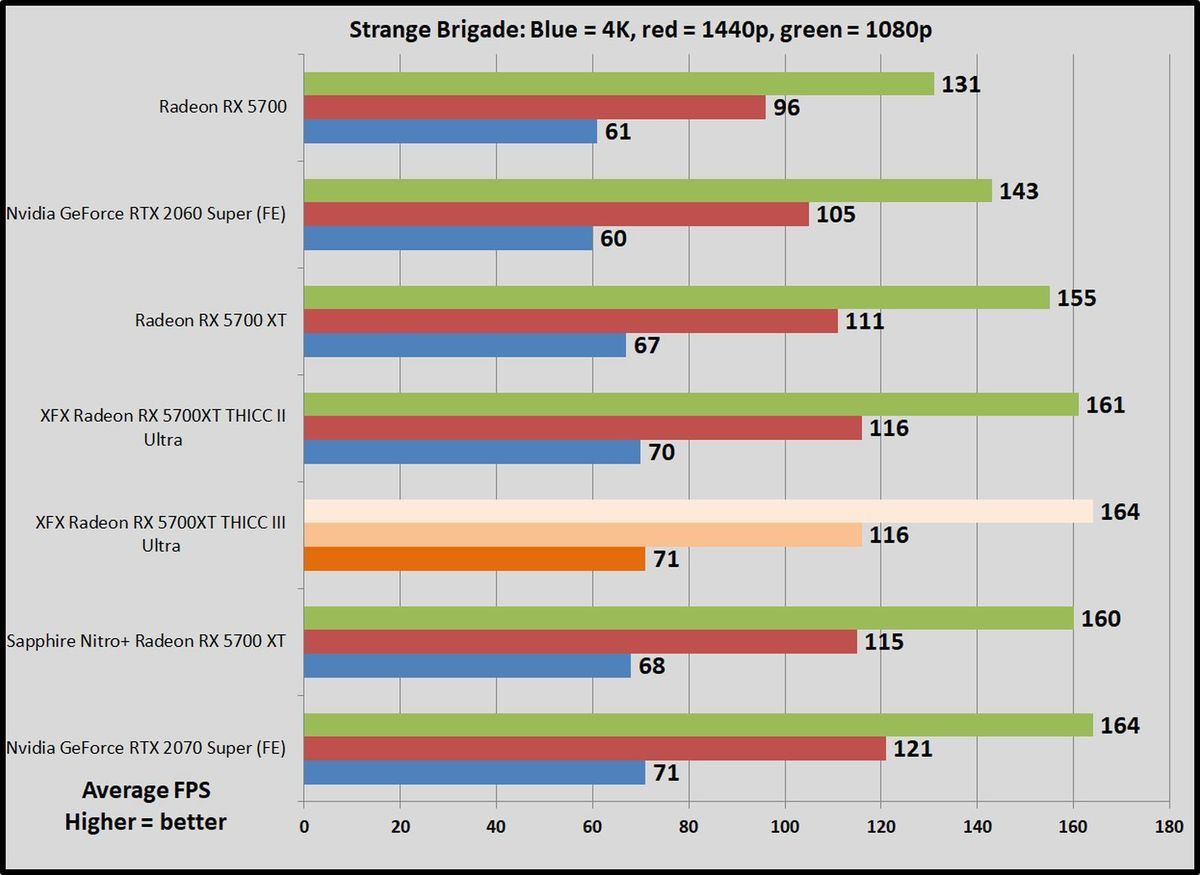
 Unusual Brigade
Strange Brigade ($50 connected Humble) is a cooperative ordinal-person shooter, where a team of adventurers blasts through hordes of mythological enemies. It's a technological case, built around the next-gen Vulkan and DirectX 12 technologies and infused with features like HDR support and the ability to toggle asynchronous figure off and on. IT uses Rebellion's usage Azure locomotive engine. We test the DX12 renderer with async figure off.
 Brad Chacos/IDG
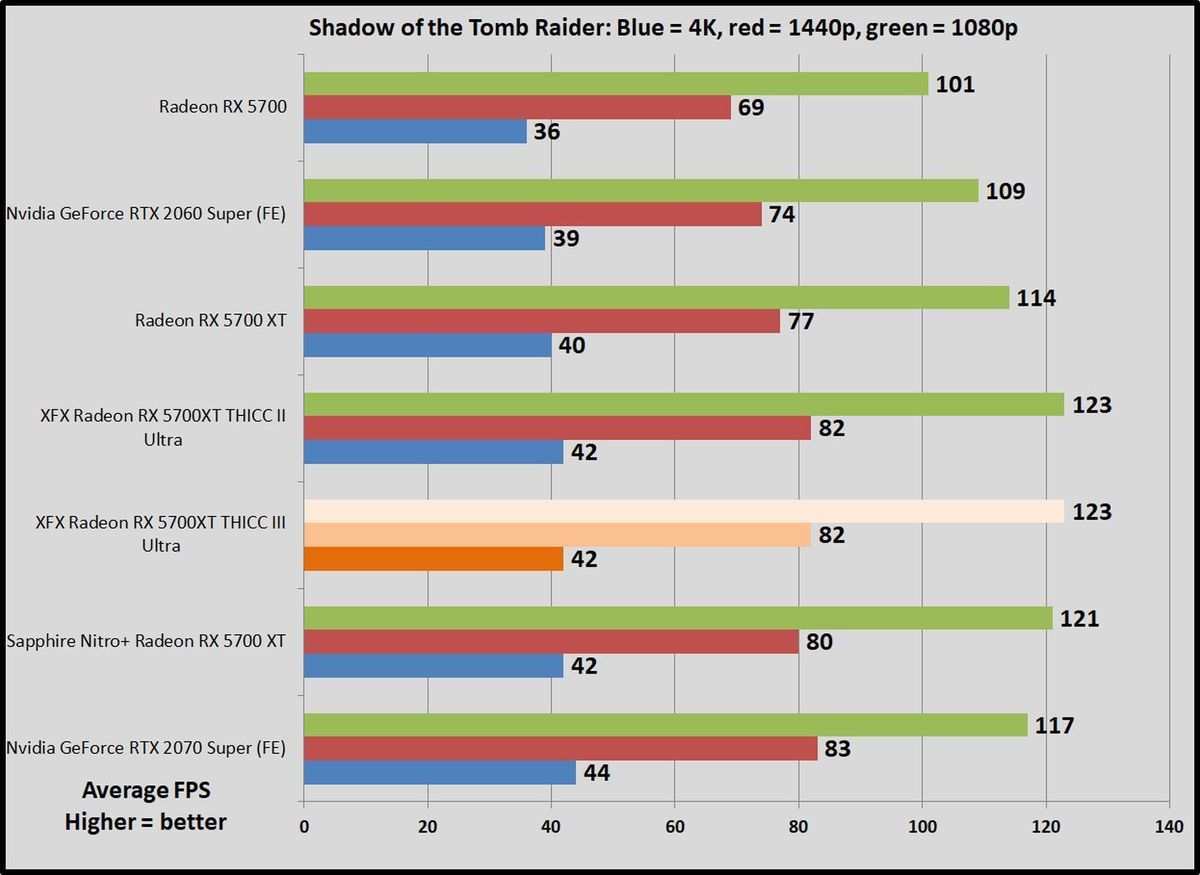
 Shadow of the Tomb Raider
Overshadow of the Tomb Raider ($60 on Lowly) concludes the reboot trilogy, and IT's absolutelygorgeous. Square Enix optimized this game for DX12, and recommends DX11 only when you're using experient hardware or Windows 7, sol we test with DX12.Phantasma of the Tomb Raider uses an enhanced interpretation of the Founding engine that also poweredRise of the Tomb Raider.
 Brad Chacos/IDG
 Ghost Recon Wildlands
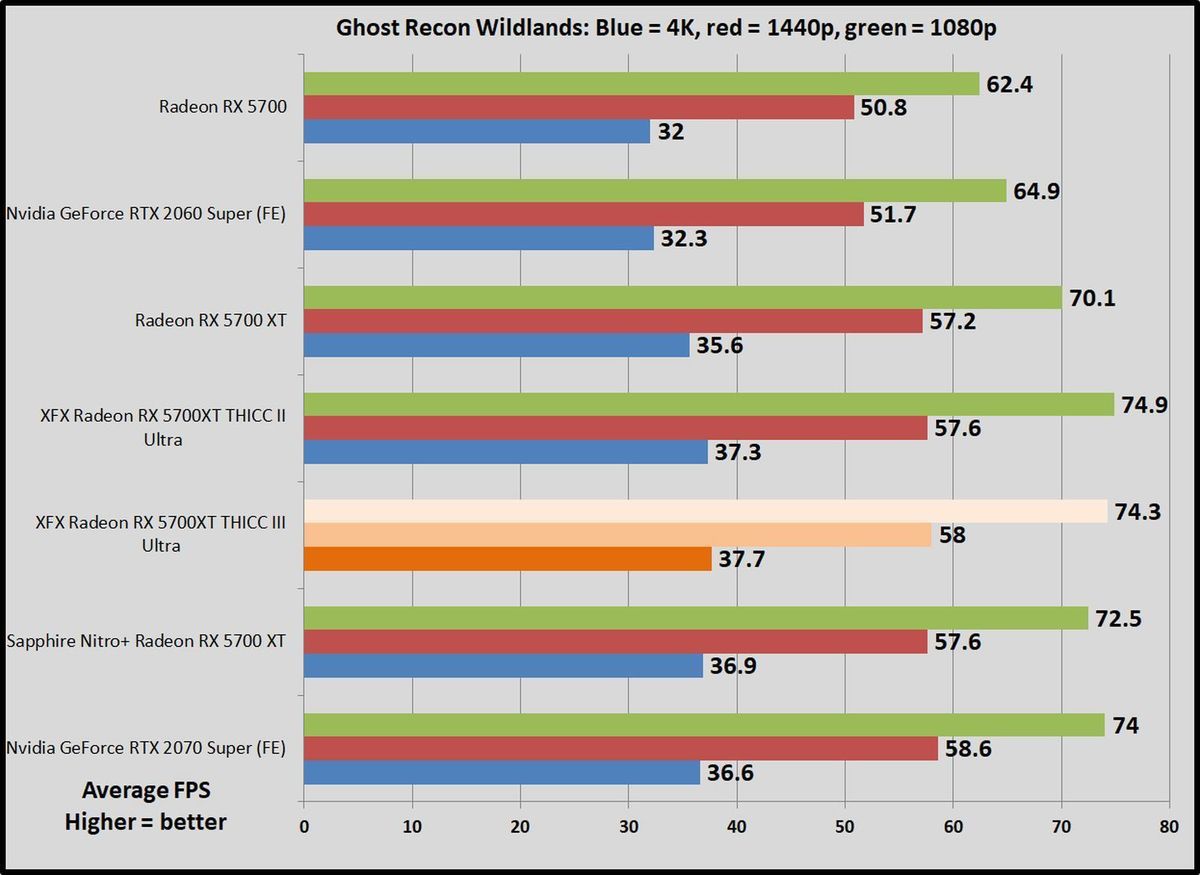
Move all over,Crysis. If you crank all the graphics options up to 11, like we do for these tests,Wraith Recon Wildlands($50 happening Humble) and its AnvilNext 2.0 engine absolutelymelt GPUs, even with a continuation due later this class. IT's out and away the most energetic secret plan in our cortege, even with newer stunners like Division 2 in the mix. Sequel Ghostwriter Recon Breakpoint recently launched merely has been receiving frequent tweaks, so we oasis't swapped over to it for our examination yet.
 Brad Chacos/IDG
 F1 2018
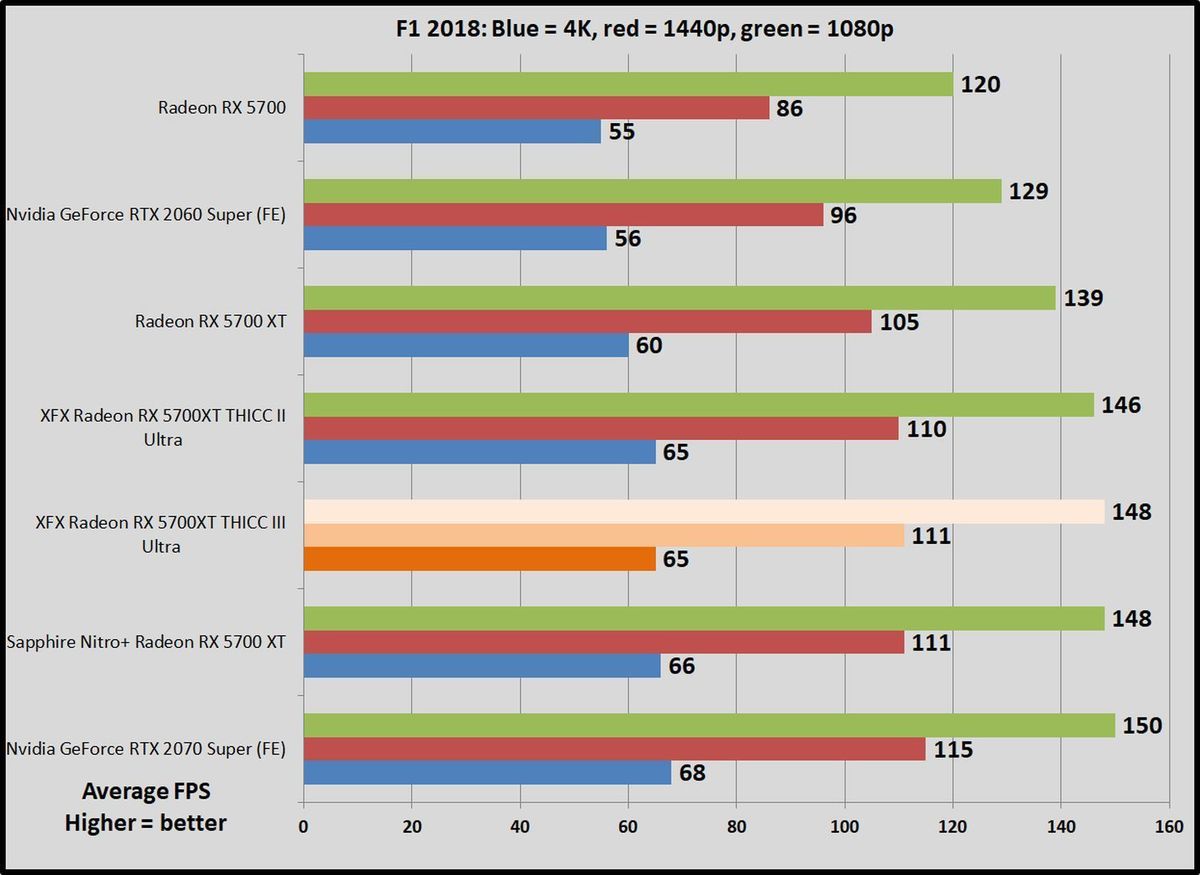
The modish in a all-night line of prosperous games,F1 2018($60 on Humble) is a gem to test, supply a wide array of both graphical and benchmarking options—making it a more more reliable (and merriment) option that theForzaserial. IT's built connected the fourth version of Codemasters' buttery-smooth Self game railway locomotive. We test two laps on the Australia course of study, with bring in skies.
 Brad Chacos/IDG
 GTA V
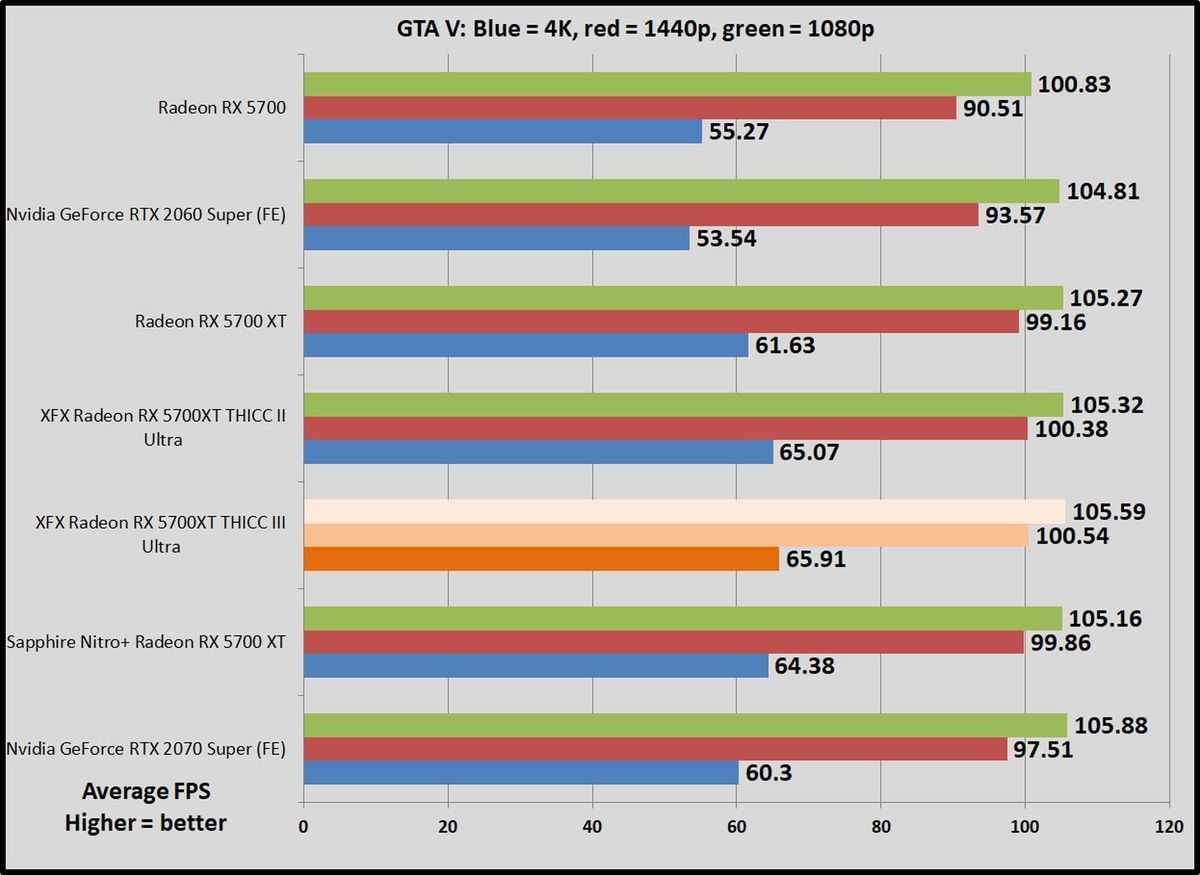
We're going to wrap things up with a game that ISN't really a visual b-burner, but still tops the Steam charts 24-hour interval in and Clarence Shepard Day Jr. verboten. We testGrand larceny Auto V ($30 on Humble) with all options turned to Very High, all High Graphics options omit extended shadows enabled, and FXAA.GTA Vruns on the RAGE engine and has accepted substantial updates since its initial set up.
 Brad Chacos/IDG
 World power draw, thermals, and randomness
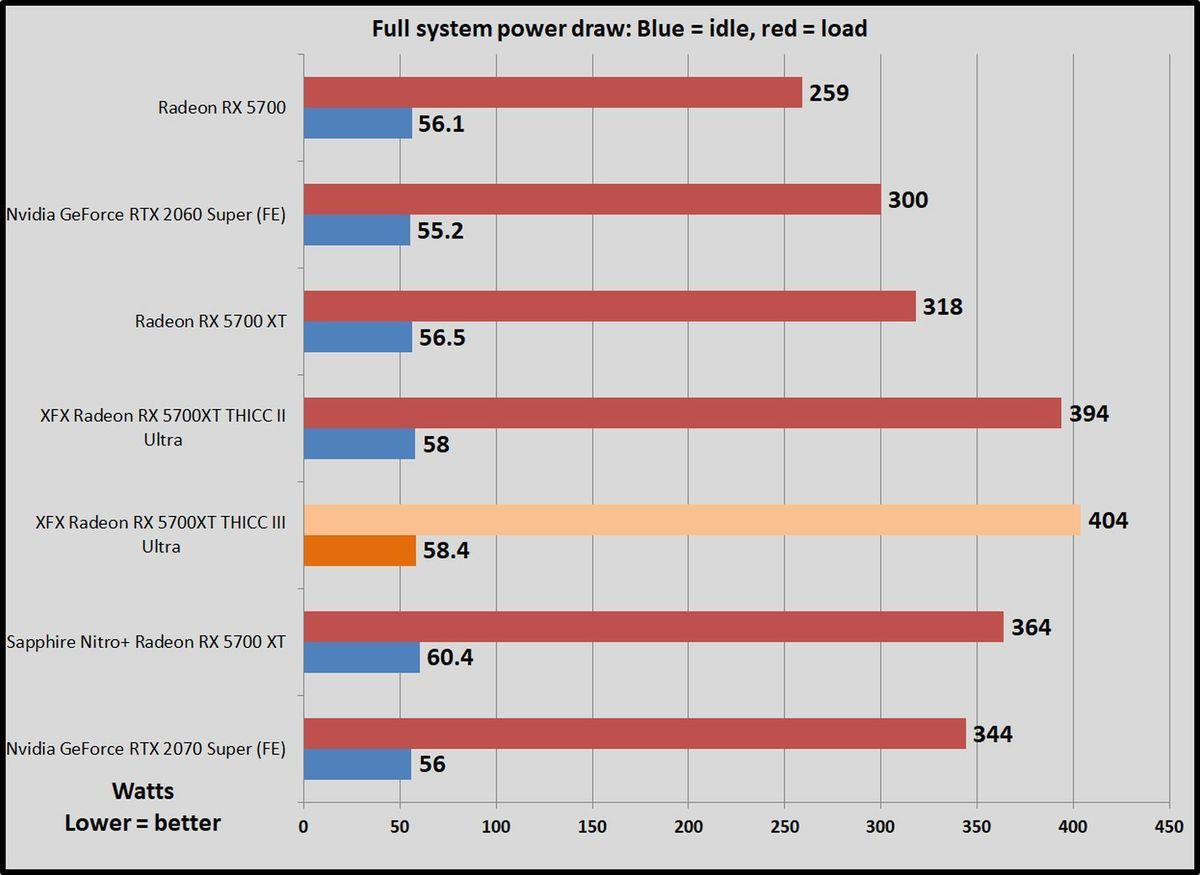
We test power draw by looping theF1 2018 benchmark for about 20 minutes subsequently we've benchmarked everything other and noting the highest reading on our Watts Up Pro meter. The initial part of the race, where all competitive cars are onscreen simultaneously, tends to be the most demanding portion.
 Brad Chacos/IDG
 The original Thicc II pushed AMD's Navi GPU hard with a hefty overclock, and the XFX Radeon RX 5700 XT Thicc III Ultra drives even harder. The lofty 1,935MHz overclock requires a similarly lofty power draw. As a solution, the Thicc Terzetto joins only the unnatural GeForce RTX 2080 Ti and last genesis's notoriously inefficient Radeon Vega 64 (neither pictured in the graph above) as the only graphics card game to energy our benchmarking machine's whole-system of rules king draw past 400 watts in that testing form.
Forget about efficiency. This muscle car's engine goes full-baron, more V8 than hybrid—though once more, the Quiet BIOS dials things back to much more reasonable levels if IT's a concern for you. (It shouldn't be if you're purchasing a graphics card like this.)
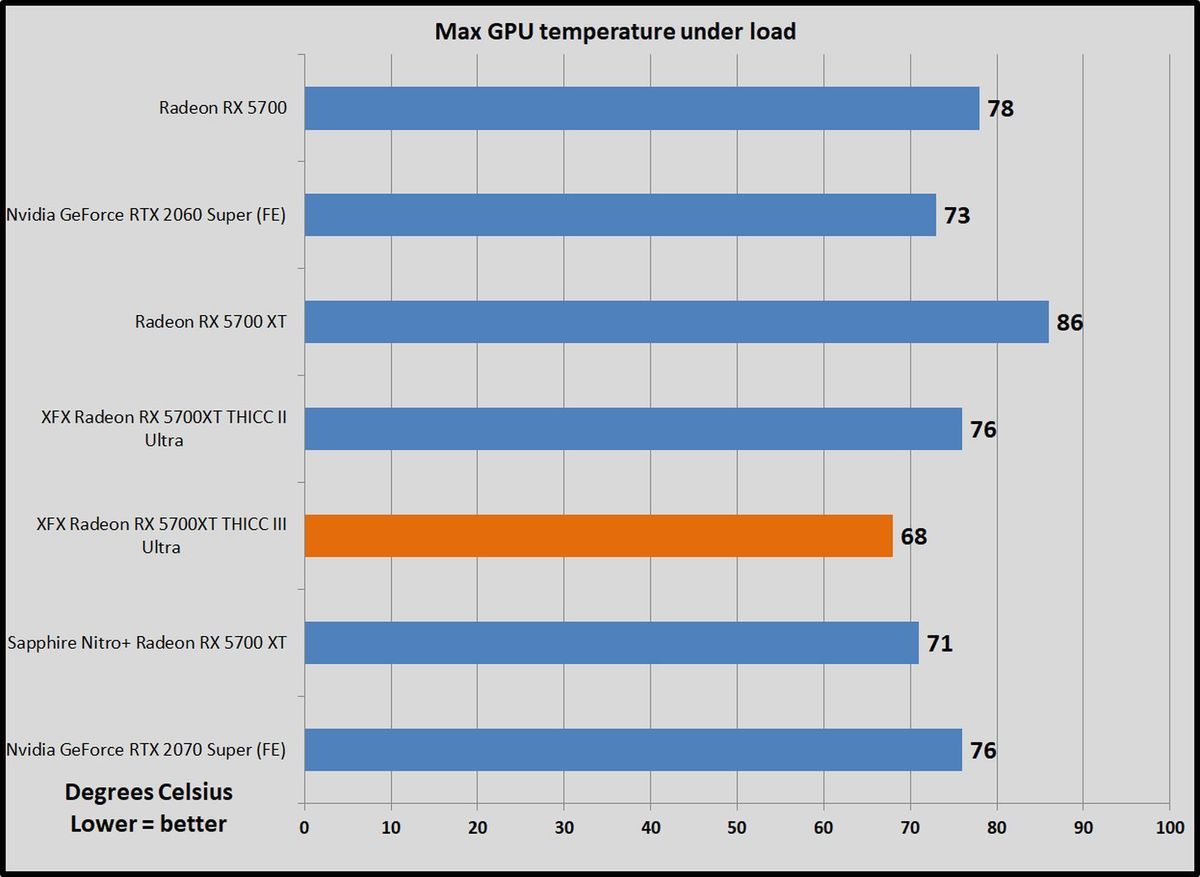
The real question is how the cooler intention handles all that power and the heat this beastly overclock throws polish off. The respond? Exceptionally well. We test thermals away leaving either AMD's Wattman (for Radeon GPUs) or EVGA's Precision X1 (for GeForce GPUs) open during theF1 2018 five-lap power draw test, noting the highest maximum temperature at the end.
 Brad Chacos/IDG
 Deal that. Temperatures never crest 70 degrees Celsius in our screen. At 68 degrees, the XFX Radeon RX 5700 XT Thicc Trio Immoderate is one of the coolest high-death nontextual matter cards we've tested—a full 8 degrees tank than the Thicc II, still with a much more aggressive overclock. Better yet, the card is very quiet, delivering subjective noise levels on a par with the go-to-meeting caloric solutions around. As you'd expect, the Still BIOS makes the nontextual matter card hard to get word even nether glutted load.
It's safe to say that the creative Thicc II's rocky thermal performance is a thing of the past. XFX responded to those concerns with a compressed-out outstanding tank design for the Thicc Trinity Ultra.
Should you buy the XFX Radeon RX 5700 XT Thicc III Ultra?
The fistful of misgivings we had with XFX's seminal Thicc design are gone. The XFX Radeon RX 5700 XT Thicc III Ultra is one of the best custom versions of one of the best GPUs you pot buy for 1440p gaming.
 Brad Chacos/IDG
 XFX leaned hard on the Radeon RX 5700 XT, supercharging the Thicc Trine Ultra's time speeds to the fastest performance we've seen yet. Doing so requires a essential power draw, only the overhauled triple-fan "Wraith" thermal project handles it aptly, delivering some of the coolest temperatures and quietest noise levels we've seen (and detected) in a high-end nontextual matter card, albeit at the price of an spear carrier inch of length. A secondary Slumberous BIOS silences it even further for a minor performance cost. The chrome-and-black muscle car aesthetic of XFX's Double Dissipation-glorious design remains drop-dead beautiful—one of my favorite customs graphics card looks in recent memory.
Better as yet, at $440, the Thicc III Ultra is priced the same as its impressive, sooner or later blemished predecessor. It well justifies the $40 premium over the reference Radeon RX 5700 XT, spitting out frames virtually as fast as the $500 GeForce RTX 2070 Super while leaving the $400 GeForce RTX 2060 Superior in the dust. Trust it or not, at $440, the XFX Radeon RX 5700 XT Thicc III Ultra is a pretty favourable rate.
The just drawbacks? The Thicc III Ultra is a solid art card, three slots deep and well over a foot long. You'll need a spacious case to squeeze this in, and a 600W surgery more PSU to handle its power. AMD Radeon graphics cards also lack dedicated hardware for real-time ray tracing, though few games support the unkind-edge engineering at this point.
The XFX Radeon RX 5700 XT Thicc III Extremist as wel runs cervix-and-neck with Sapphire's sublime Nitro+ as our favorite custom Navi design. Sapphire's card costs $10 more but delivers flashier features: a metal-togged up out, impressive and extensive RGB firing, and nifty software that mixes answer downscaling with AMD's Radeon Fancy Sharpening engineering to hand over immoderate-fast frame up rates with minimal sense modality degradation. XFX's card stands forbidden for its stunning muscle car-evoking aesthetic design, still lower temperatures, and out-of-the-boxwood performance amend than its Azure rival, albeit barely.
 Brad Chacos/IDG
 Vroom
The Radeon RX 5700 XT also excels at pinched refresh-rate 1440p gaming with hardly a visual compromises, or even 4K gaming with graphics dialed down to High in some games. IT's a animal. If you're using a 60Hz 1440p monitor or a high refresh rate 1080p display, the $350 Radeon RX 5700 non-XT might be a better option. Conversely, if you want to tap into cutting-edge rattling-time ray tracing in the handful of games that support it, step up to the $500 Nvidia GeForce RTX 2070 Super rather than the $400 GeForce RTX 2060 Super, which is well slower than the AMD card and requires some significant visual trade-offs for ray tracing. If you're indifferent about ray tracing, definitely prefer for the XFX Radeon RX 5700 XT Thicc III Ultra over the RTX 2070 Super, as AMD's option delivers virtually the corresponding performance for some less money.
Bottom line: XFX nailed the do-over. Spell the original Thicc Two was fun, smart, and blemished, the XFX Radeon RX 5700 XT Thicc Threesome Ultra is fun, fast, and almost flawless. It's highly recommended and easy earns our Editors' Choice award. Preceptor't be surprised if the original Thicc Deuce is phased out soon, because this superior successor nailed it.

Source: https://www.pcworld.com/article/398475/xfx-radeon-rx-5700-xt-thicc-iii-ultra-review.html
Posted by: wrightsors1940.blogspot.com
0 Response to "XFX Radeon RX 5700 XT Thicc III Ultra review: A roaring muscle car, barely heard - wrightsors1940"
Post a Comment